

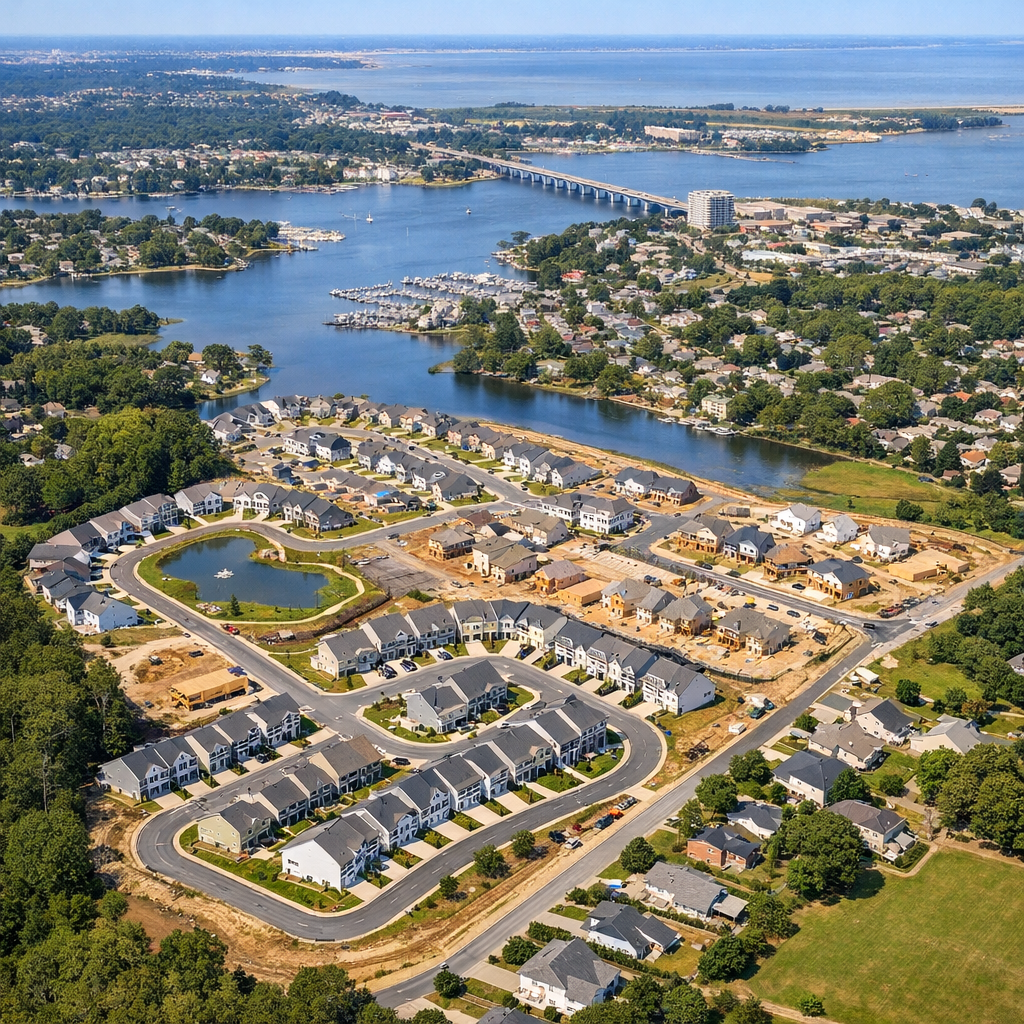
Hampton, Virginia, continues to present a dynamic real estate market characterized by steady home prices, a competitive rental environment, and strategic development initiatives aimed at enhancing the city’s housing landscape.
Current Market Trends
As of April 2026, the median listing price for homes in Hampton stands at $304,500, reflecting a 6.86% increase over the past year. The median sold price is $282,500, with properties averaging 38 days on the market. This indicates a balanced market where both buyers and sellers can find opportunities. The price per square foot has risen to $194, marking a 1.04% year-over-year increase, suggesting a steady appreciation in property values.
Rental Market Dynamics
The rental sector in Hampton is experiencing notable activity. The median rent is approximately $1,725 per month, representing a 3.17% increase from the previous year. With 193 active rental listings, the market offers a variety of options for prospective tenants. However, the 11.49% decrease in rental properties compared to last year indicates a tightening market, potentially leading to increased competition among renters.
Upcoming Developments
To address the growing demand for housing and to preserve the unique character of its neighborhoods, Hampton has initiated several development projects. One significant endeavor is the Hampton Infill Housing Planbook, launched in partnership with Norfolk-based Work Program Architects. This initiative focuses on guiding the development of new housing in five historic neighborhoods: Downtown, Phoebus, Aberdeen, Greater Wythe, and Buckroe. The Planbook will feature pre-approved, customizable home designs that reflect the architectural styles of these areas, facilitating efficient and cohesive development.
Additionally, the Orchard Oaks project is set to commence construction in 2026. Located at 261 Woodland Street, this multifamily development aims to provide modern housing options while respecting the site’s historical significance as a family-owned agricultural farm since 1942. The project required rezoning to MD-4, a newly established urban density designation within the city, to accommodate the development.
Conclusion
Hampton’s real estate market is marked by steady growth and proactive development strategies. For potential buyers and renters, the market offers a range of opportunities, though staying informed about current trends and upcoming projects is essential. As the city continues to evolve, these initiatives aim to balance growth with the preservation of Hampton’s unique community character.