

By Benjamin Baker
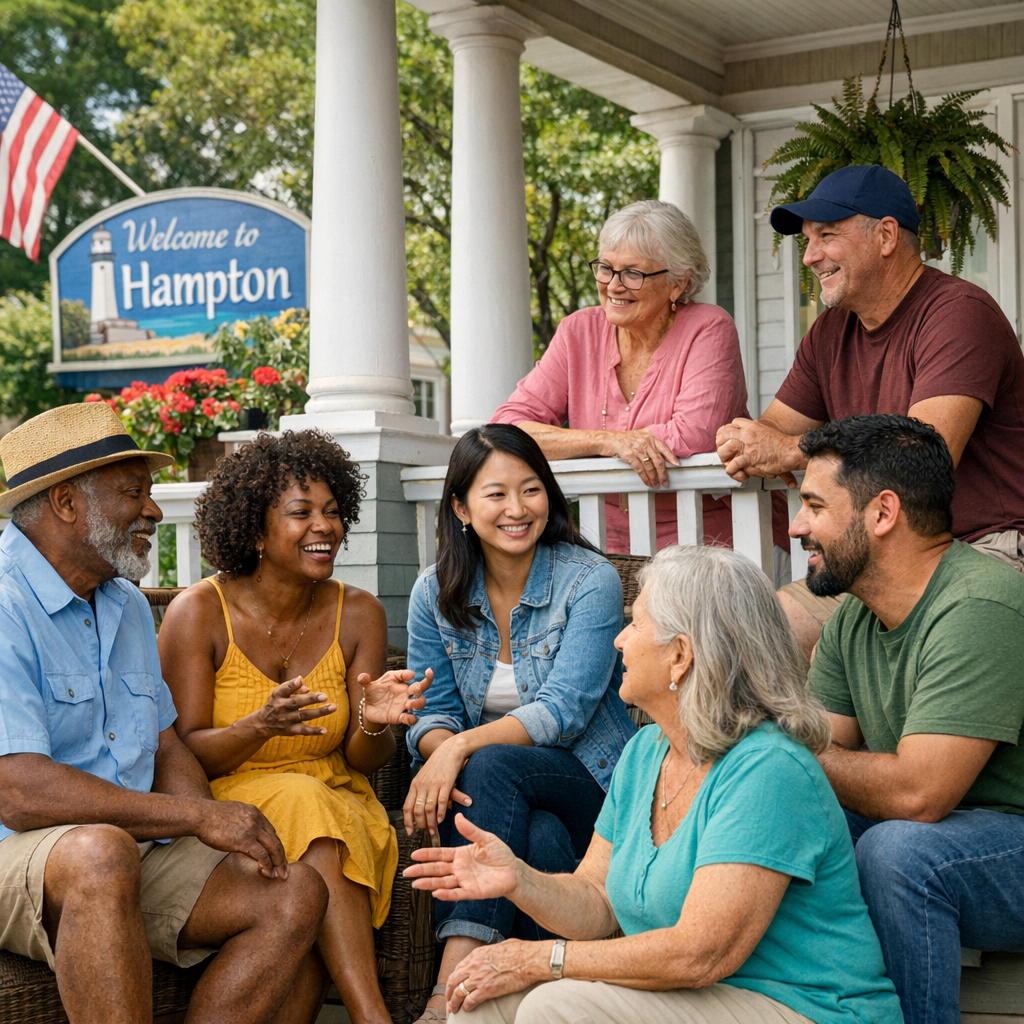
Hampton is more than a place. It’s a mosaic of points of view: families whose roots run deep, newcomers seeking fresh starts, teens balancing school and hope, elders safeguarding memory and tradition. What binds us isn’t always visible in meetings or news reports—it’s in our shared struggles and triumphs.
Our mosaic: many voices, many backgrounds
We are a city of around 137,700 people, where over half identify as African American and over 40% as White, with growing Hispanic, Asian, and multiracial communities. Every neighborhood adds texture—different stories, cultural traditions, languages, beliefs. These differences don’t divide us; they define what Hampton can become. Knowing this helps us build institutions, policies, and spaces that truly reflect our people. It requires more than just representation—it means listening deeply.
Where voices have made a difference
Some of Hampton’s strongest transformations started with one woman, one group, one idea. In Fox Hill, neighbors rallied against a proposed development on wetlands. The issue landed before the planning commission; citizens testified. The city rejected the proposal. A community had preserved both its land and its voice.
The “I-Value” budget process offers another example of public power. Residents are asked what services matter most—parks, libraries, public safety, or something else—and how they’d trim where necessary. The city listens—and sometimes even raises taxes with the community’s support because results show people are willing to invest in what they care about. This process builds not just policy but trust.
Challenges still unspoken enough
And yet, many feel they’re not always heard. Affordable housing remains out of reach for many, especially with rising costs and stagnant incomes. Rural and low-income neighborhoods still contend with flooding, infrastructure neglect, and under-resourced schools. Folks with limited English, disabilities, or new to the area often find doors closed or policies hard to navigate.
When voices go unheard, decisions suffer. Our tax, zoning, and transportation choices often reflect those already at tables—those comfortable speaking up. When we expand who’s included—through translation, outreach, listening circles—our decisions improve. Every corner of Hampton deserves that attention.
What “being heard” could look like
- More accessible forums. Flexible meeting times, child care during sessions, translation services—makes participation realistic for people with jobs, kids, or limited mobility.
- Ward-level storytelling. Not just public hearings—but story swaps, neighborhood portraits, photo essays. Let’s see ourselves in the narrative of our own city.
- Transparent decision back-and-forth. When feedback is given, show what changed. When decisions didn’t shift, explain why. Clear reasoning builds respect.
- Cross-generation connection. Young people and elders both hold wisdom: the promise and urgency of now, and the memory of what we’ve overcome. Blending those perspectives strengthens policies and our identity.
A vision rooted in story
If Hampton is ever going to feel whole, it’s not enough to plan for our future by statewide formulas or external benchmarks. Our future emerges from the stories we tell each other in kitchens, porches, school halls, lunchrooms. When we see and hear each other fully—our joys, sorrows, hopes—we build something lasting.
This isn’t a call for consensus. It’s a call for acknowledgment—for the sense that you matter. In the end, our city’s strength doesn’t come from grand buildings or high-dollar plans. It comes from every person who opens their heart and voice, trusting that they—and their neighbor—have a place here.