

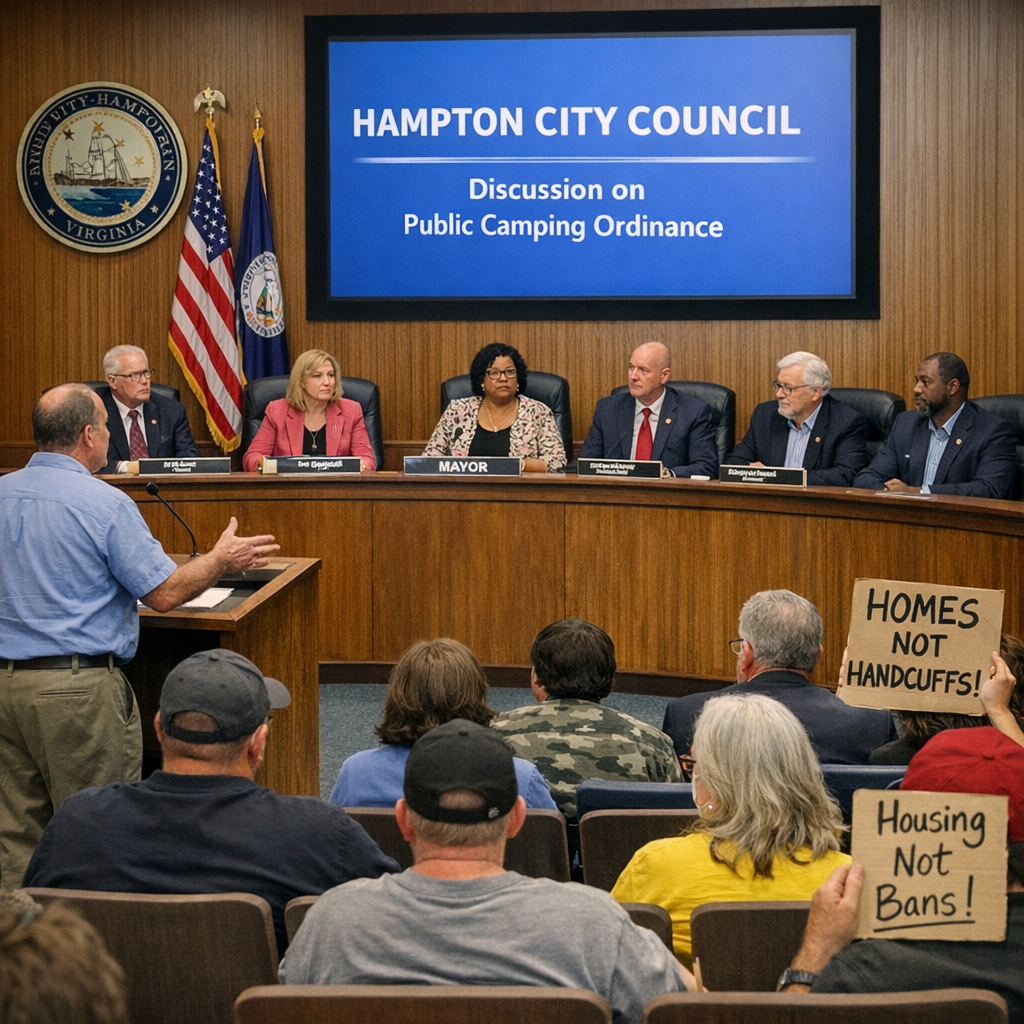
In a recent move to address community concerns, the Hampton City Council has approved an ordinance prohibiting camping and sleeping on public property. This decision comes in response to feedback from residents and business owners about disruptive behaviors in public spaces.
Under the new ordinance, violations are classified as a Class 2 misdemeanor, which can result in penalties of up to six months in jail and fines up to $1,000. However, enforcement emphasizes compassion: police officers are required to issue multiple warnings and offer housing assistance before taking further action. Summonses are only issued if individuals refuse to vacate the area when asked.
City Manager Mary Bunting highlighted that the ordinance aims to provide tools to address behaviors such as public urination, which have been challenging to manage without direct observation by law enforcement. She stated, “Everybody says, ‘Well, then the police just give them a ticket for those things,’ but the police have to see them do it and they usually don’t.”
Supporters of the ordinance, like Raymond Tripp, executive director of Coliseum Central, believe it will enhance the appeal of public spaces and encourage business investment. Tripp noted that public camping and storage of personal items can deter residents from utilizing public transit and other amenities.
Conversely, advocates for individuals experiencing homelessness express concerns that the ordinance may criminalize homelessness and create additional barriers for those seeking stability. Amanda Ofsonka, a director with The Planning Council, remarked, “Camping bans work as another effort to oppress people that are already facing hardships.”
Hampton’s approach aligns with a 2024 U.S. Supreme Court ruling that permits anti-camping laws, provided they do not specifically target certain groups. The city has been developing this ordinance since 2025, adjusting potential penalties to ensure access to public defenders and diversion programs for behavioral health.
As the ordinance takes effect, the city emphasizes its commitment to balancing community concerns with compassionate support for vulnerable populations, aiming to create a safe and welcoming environment for all residents.